tish-audio
A live audio rig in Tish: guitar, mic and MIDI through 50+ pedals, amps and synth instruments on a WebGL patch board, with a guitar tuner, chord detection, Jam mode and Guitarcade; browser and desktop
- BPM
- 128
- GRADE
- SS
- LEVEL
- 4
- RELEASES
- 0
- YEARS
- 2026–2026
Pedals And Racks
tish-audio is a pedal and rack friendly web audio platform.
A pedalboard is a chain: the signal goes in one end, through boxes in whatever order you choose, and out the other. A rack is a frame of modules you patch together and rearrange. I wanted software audio to work like that.
It shipped April 18 2026, in the year I spent building audio things. deck, the little text language for music, came around the same time, and Deckard, the four deck collaborative DAW, was already running. tish-audio handles the signal chain, where you decide what the sound goes through.
tish-audio is a live audio rig you play through: plug in a guitar, a mic or a MIDI controller, build a signal chain out of pedals and rack gear on a patch board, and play — in the browser or as a desktop app (ToneFrame). It is written entirely in Tish, on Lattish, with its own WebGL renderer for the patch board and the gear.
The rig is a node graph. Inputs, pedals, rack units, instruments and the master out are nodes you wire together, and the graph is rebuilt into a live Web Audio signal path as you patch, with parameter changes smoothed so you can turn knobs mid-note without clicks. Each piece of gear follows a GarageBand-style module pattern — a face drawn from a pedal or rack chassis, an audio graph builder, and metadata — so adding a module is self-contained. Whole rigs save and load as workspaces.
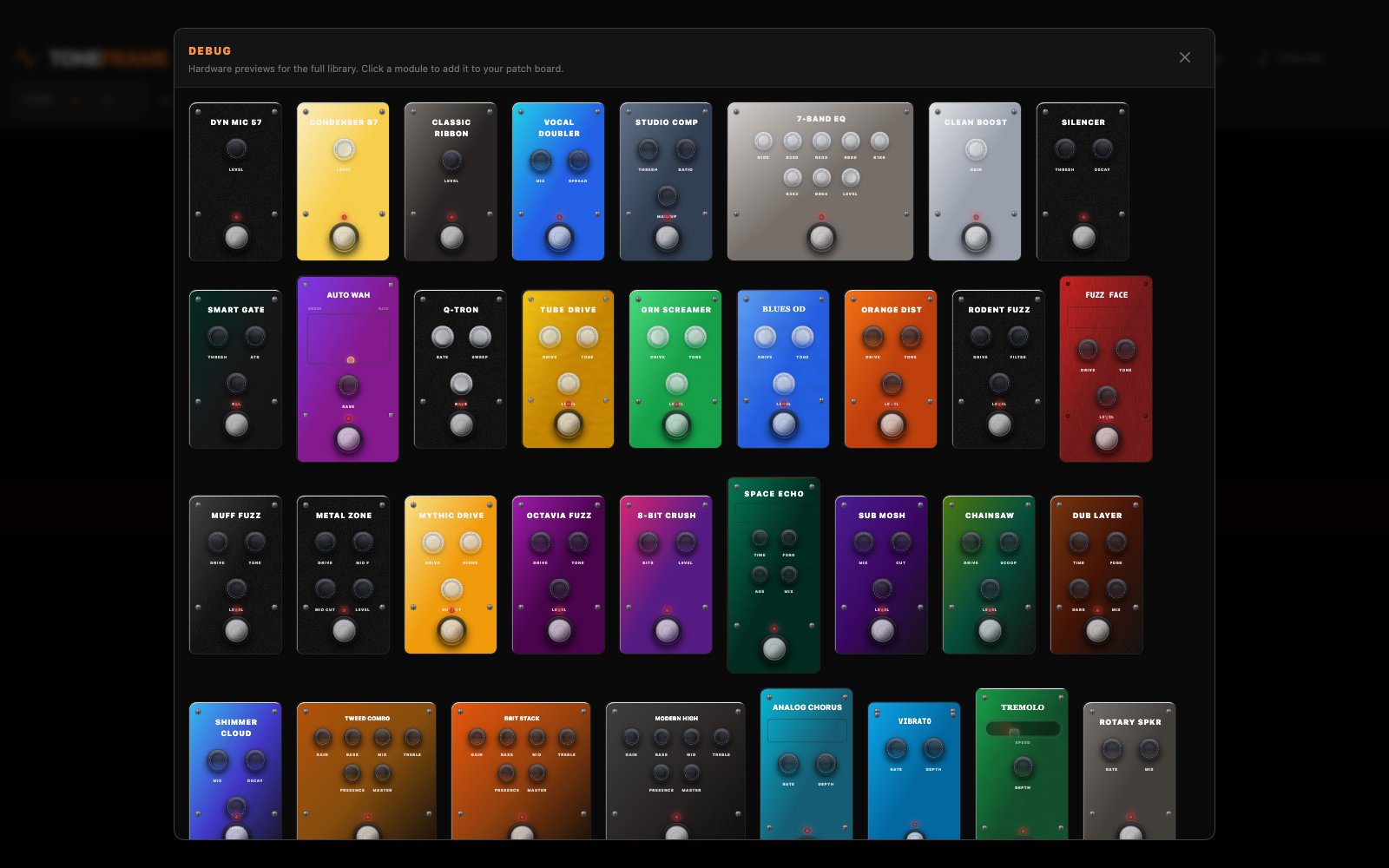
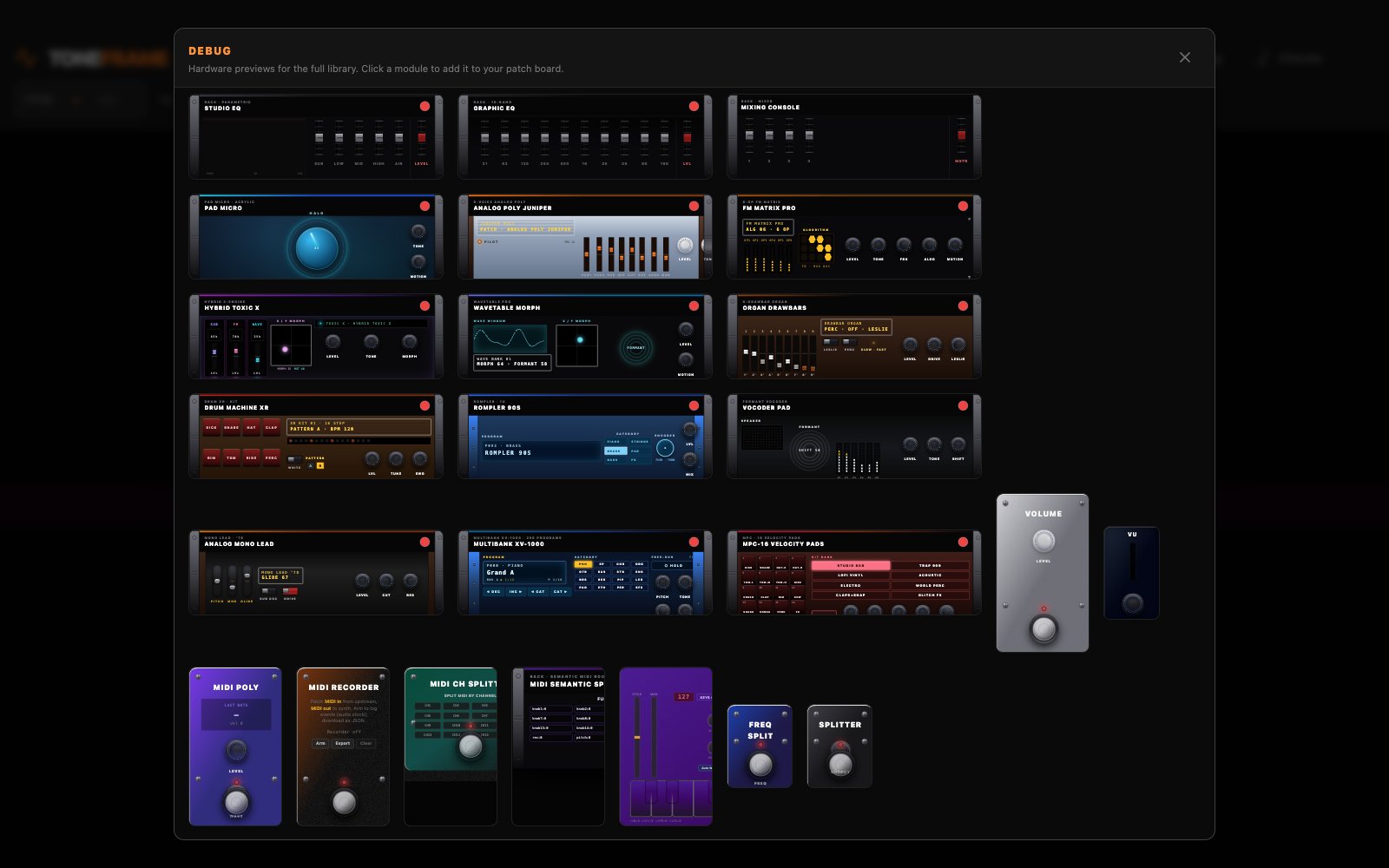
There are over fifty modules. Drive and fuzz: boost, overdrive, a screamer, a blues drive, a rat, a muff, a DS-1-style distortion, a metal pedal, fuzz, octave fuzz and a chainsaw. Amps: tweed, modern and stack, plus cabinet-mic simulations of an SM57, a U87 and a ribbon. Modulation: chorus, flanger, phaser, tremolo, vibrato, rotary, auto-wah and a vocal doubler. Time and space: delay, slapback, tape echo, a dub layer, and hall, plate, spring and shimmer reverbs. Dynamics and utility: compressor, noise gate and a smart gate, a seven-band EQ, crossover, splitter, bitcrush and volume. For players without a guitar there is a rack of instruments — analog mono and poly synths, FM, wavetable morphing, a vocoder pad, an organ with drawbars, a 90s rompler, a multibank sampler and a drum machine with MPC-style pads — on a synth engine with an oscillator bank, envelopes, LFOs, a mod matrix, voice management and AudioWorklet DSP.
MIDI is first class. There is a MIDI router with channel and semantic splitters, polyphony and a recorder, MIDI learn for any control, and hardware auto-rig: pick a controller from Connect hardware and it recognises the device, merges multi-port USB devices into one row, lays out a panel of its physical controls and, on an empty board, wires up a starter rack to the master out.
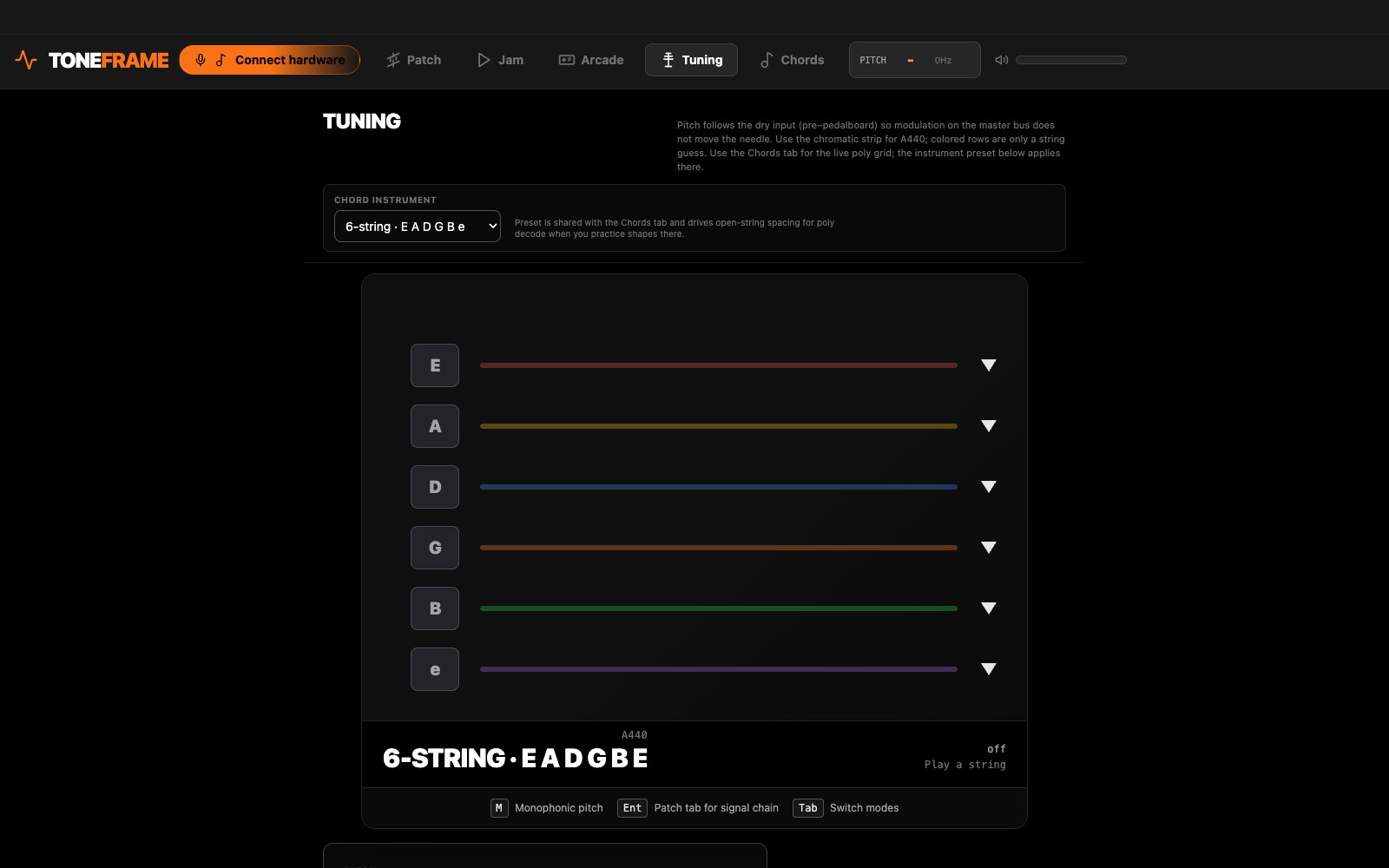
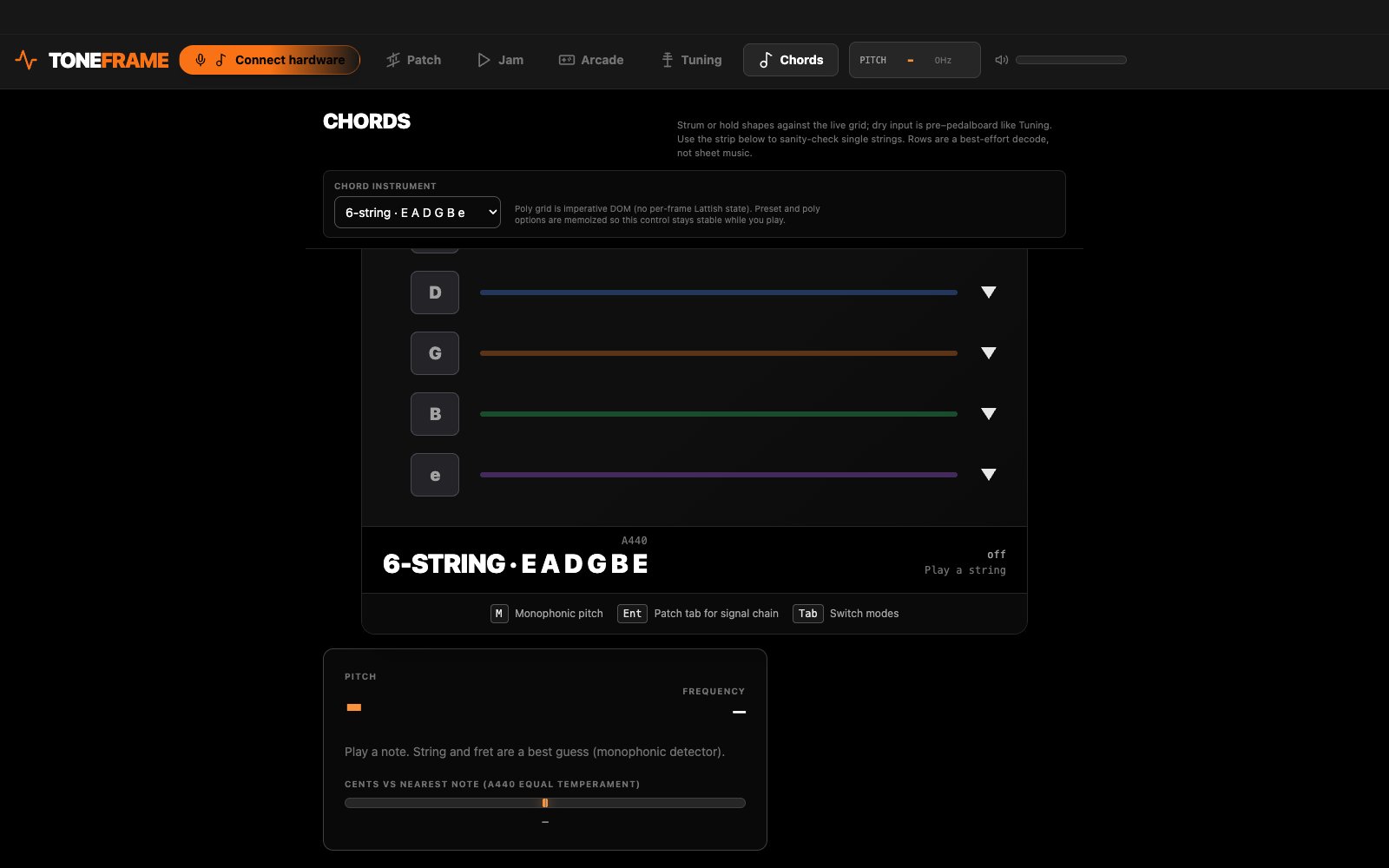
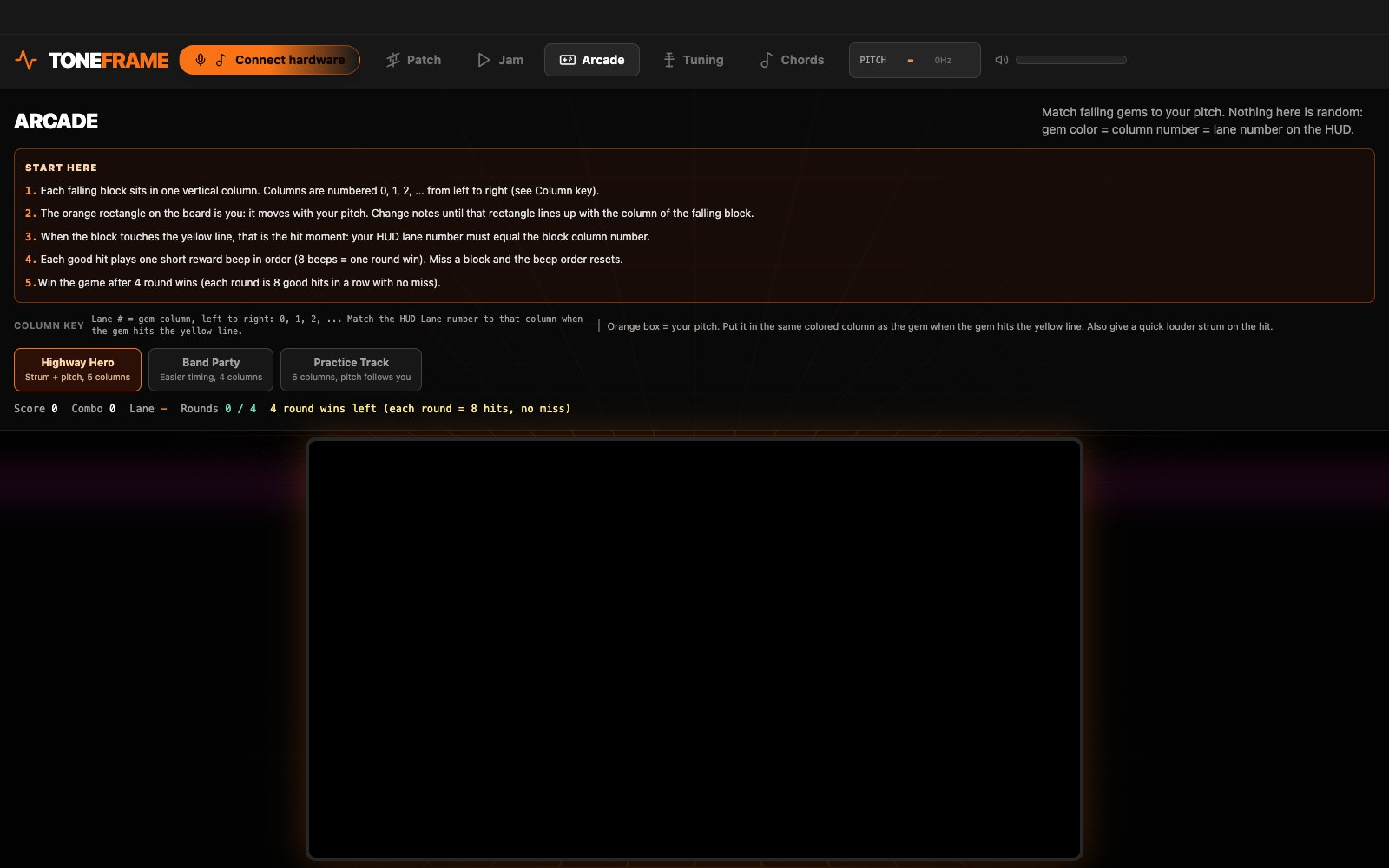
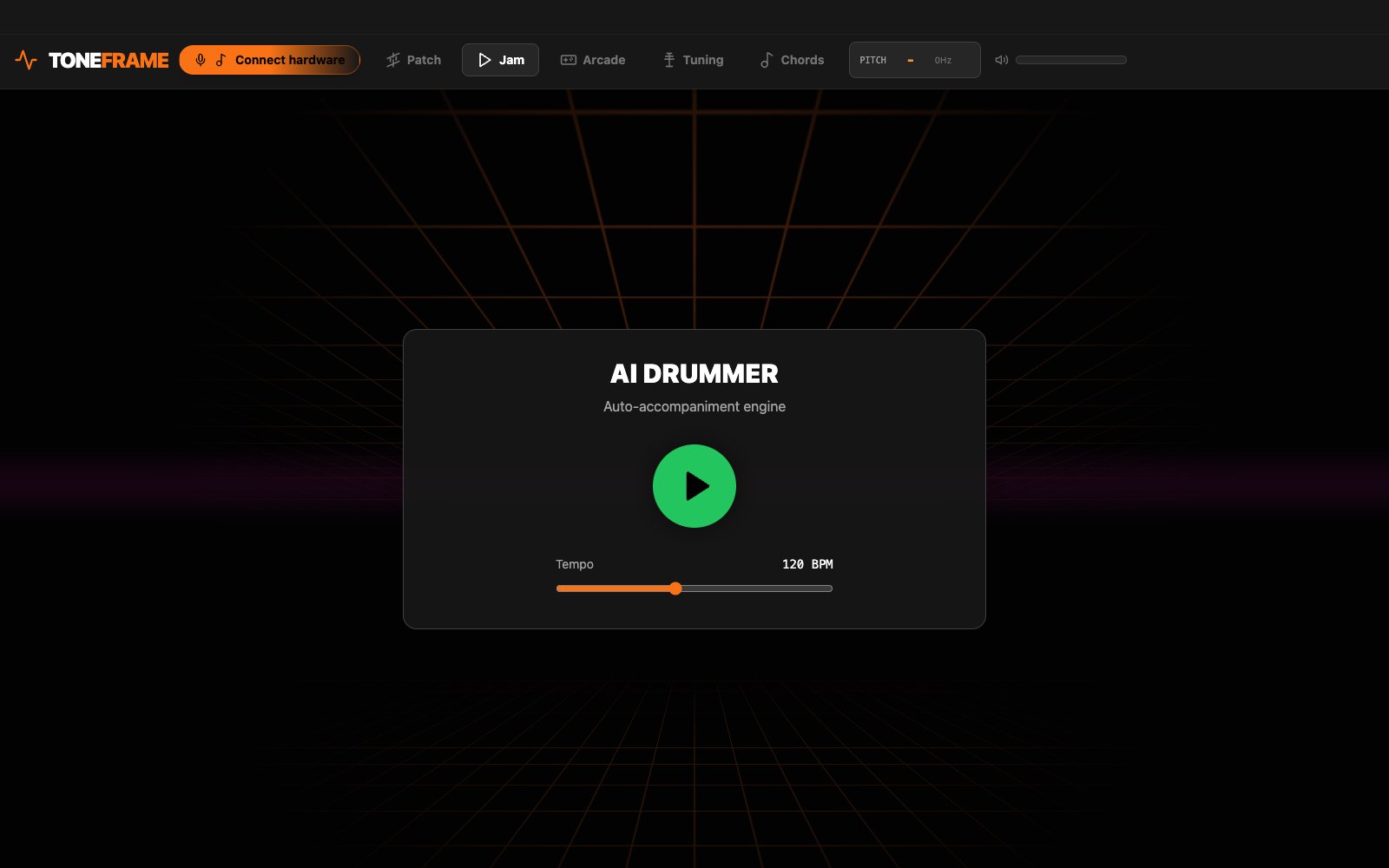
It also listens. A guitar pitch engine does tuning — a Rocksmith-style tuner with per-string readout — live tone and string detection, polyphonic strum analysis and live chord detection with fretboard voicings and a chord tutorial coach. That same engine drives Guitarcade, an arcade rhythm game where you play the lanes on a real guitar and clear phrases by pitch, and Jam mode has an AI drummer, an auto-accompaniment engine with a tempo control, to play along with.
Rack bundles are data-first manifests, so new gear can be loaded from a marketplace without shipping code, and the app updates itself over the air.
before this
- Wavy2024Tone.js instruments in the browser
- WebGL Preset Visualizer2025music visualizer