Pelago
A Mario Party-style 3D party game in React Three Fiber: 1-4 players locally or online roll across a hex board for coins and stars, with real-time 3D minigames. Three modes on one engine (Party Game, a Tabletop RPG with classes, quests and scripted beats, and a 100-player Battle Royale with a shrinking storm), an authoritative Colyseus server, Steam and guest sign-in, parties and matchmaking, built from KayKit assets.
- BPM
- 168
- GRADE
- S
- LEVEL
- 6
- RELEASES
- 0
- YEARS
- 2026–2026
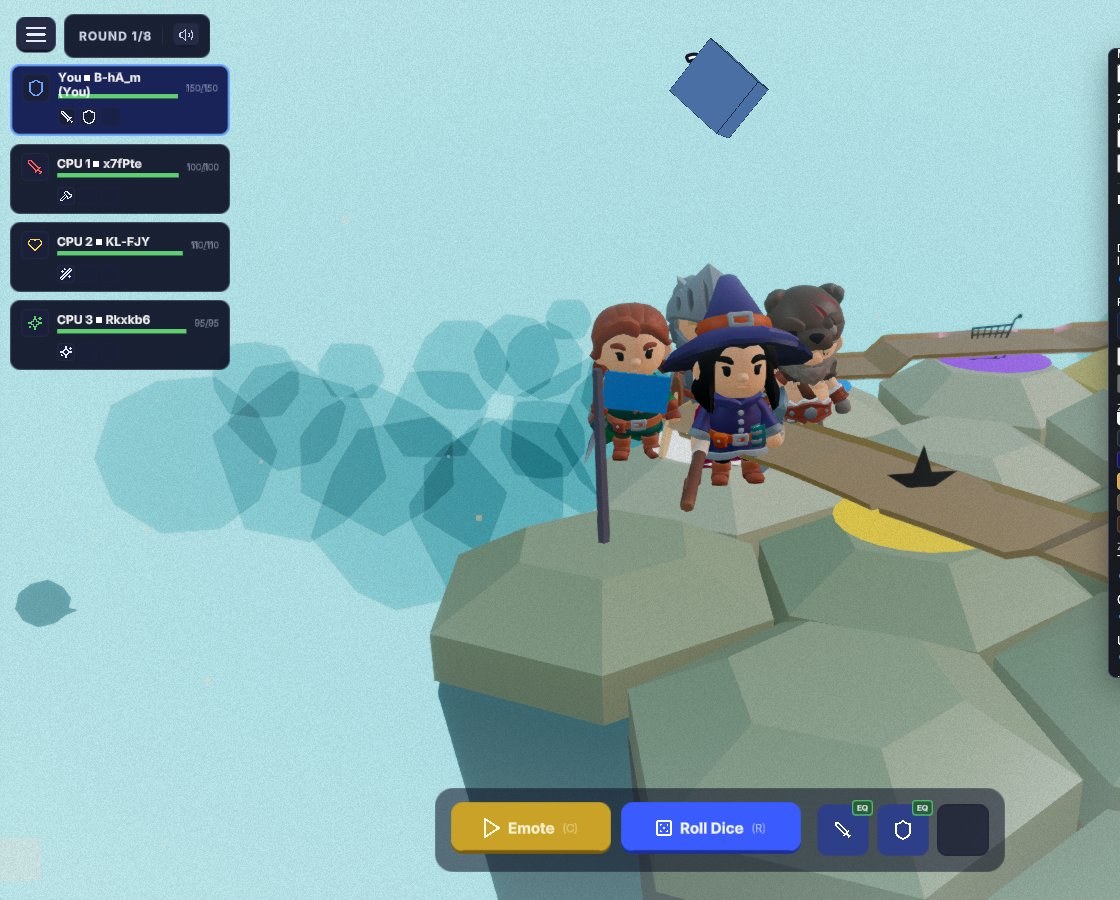
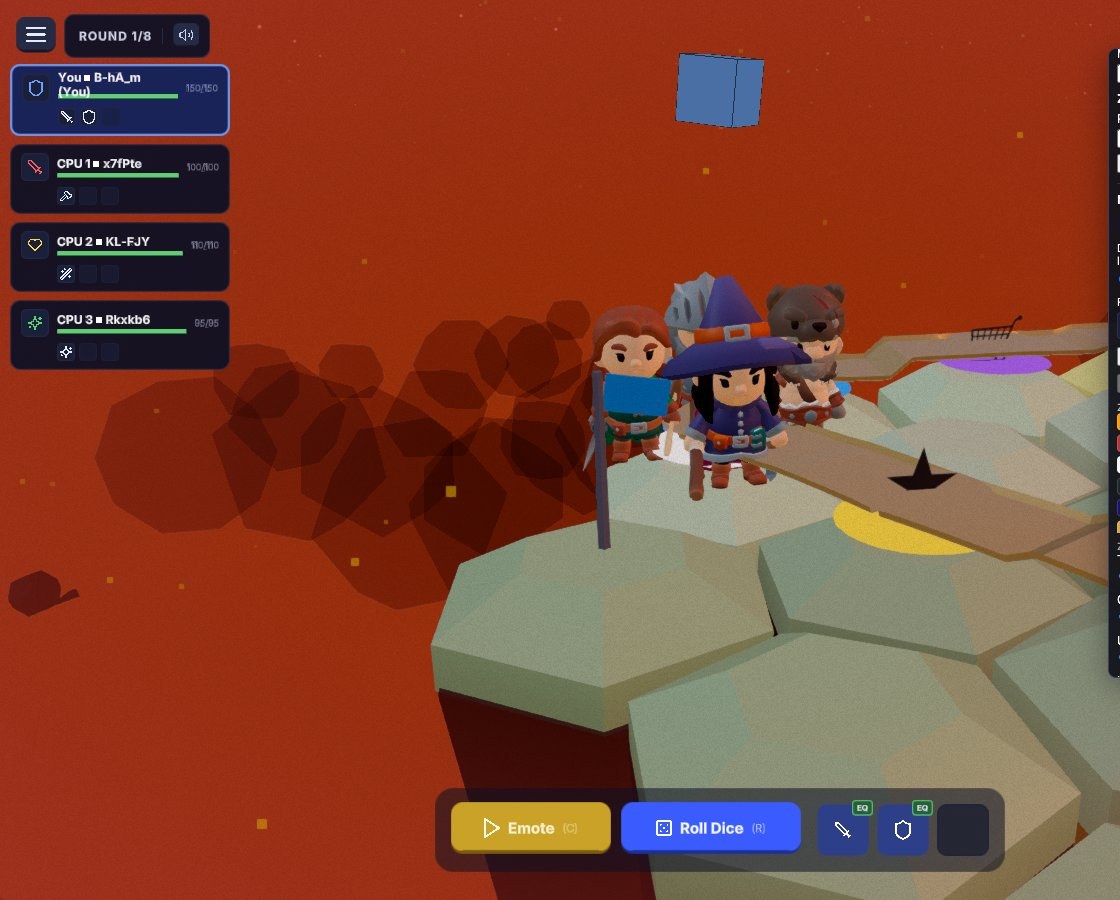
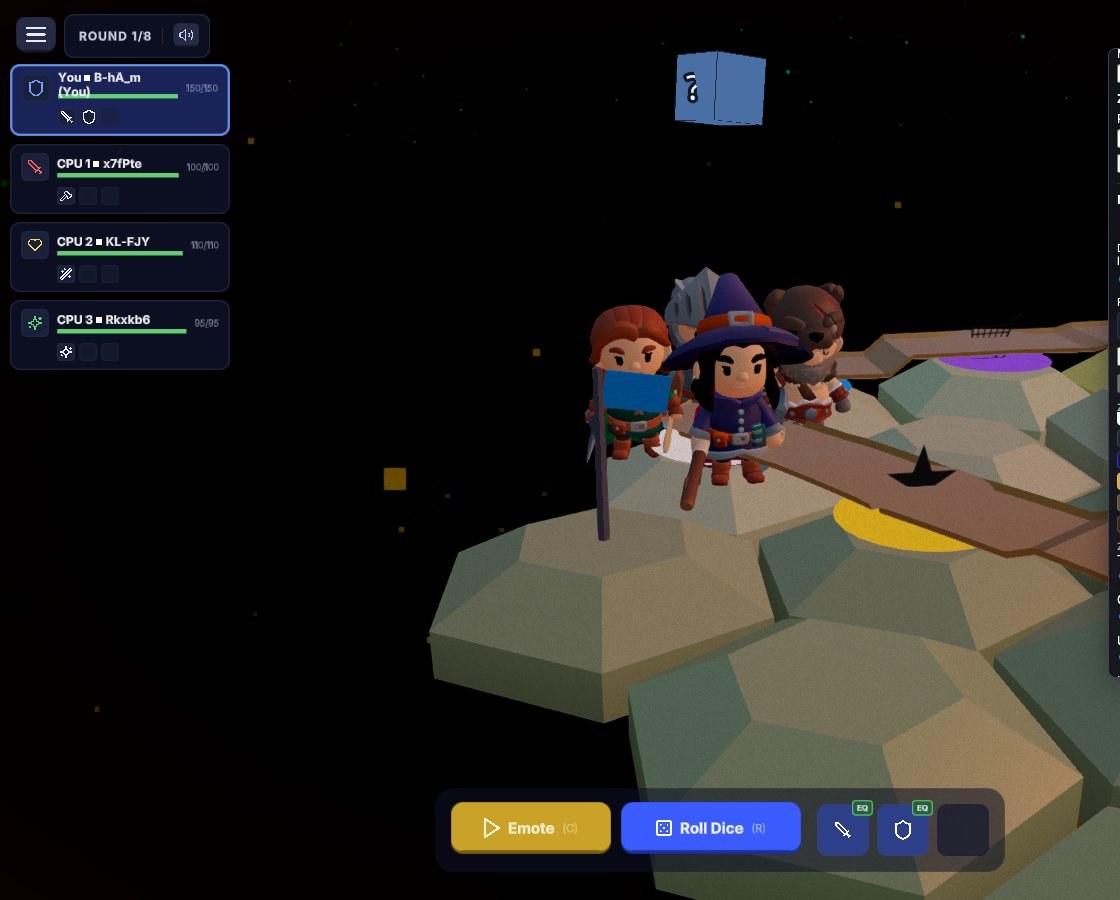
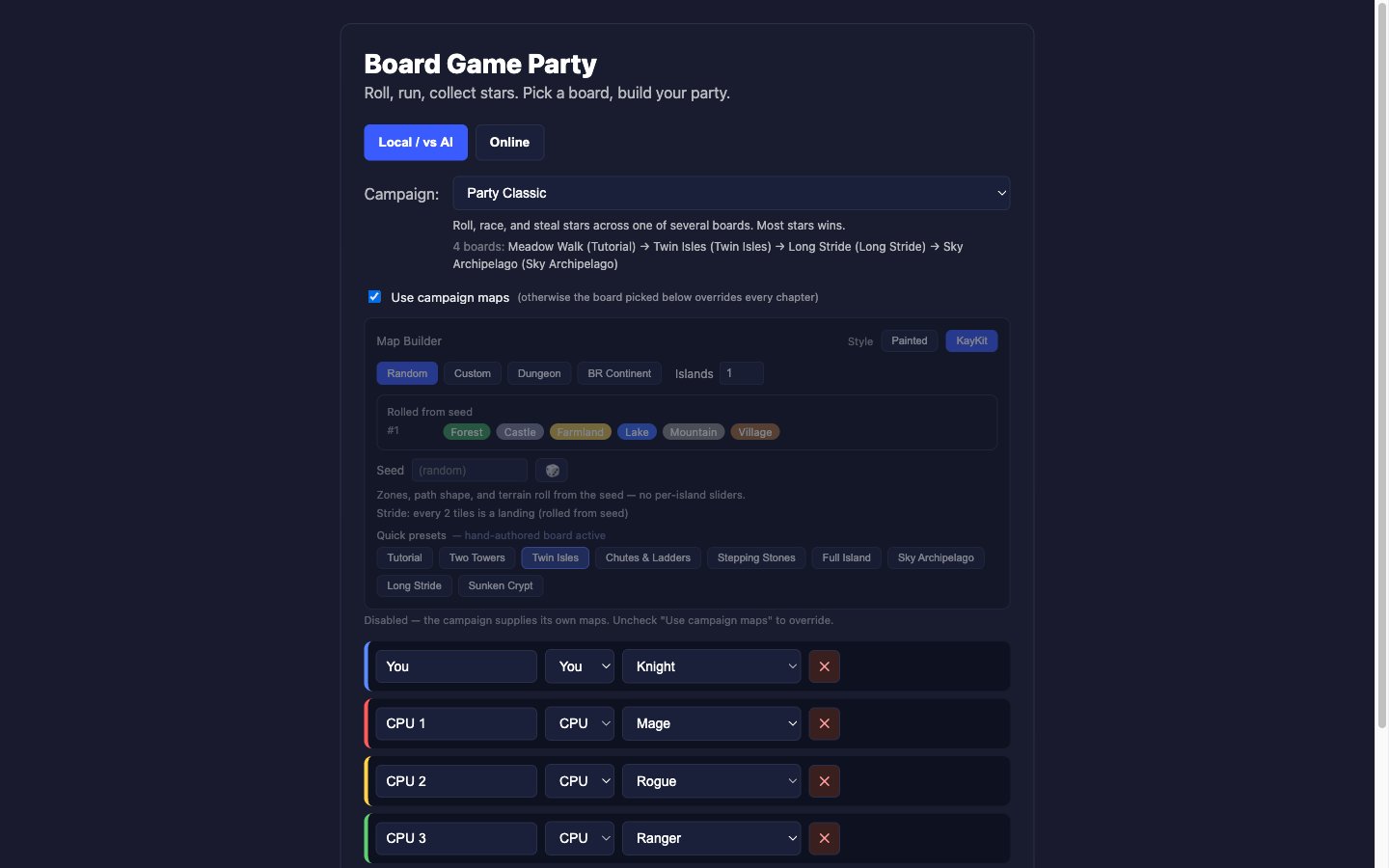
Four Players On One Board
Pelago started on May 8, 2026 and ran through late July, which makes it the biggest thing under the schlop banner. I called it Board Game Party, a Mario Party style 3D game in React Three Fiber for one to four players, locally or online.
Instead of building three games, there's one authoritative engine in shared/game/engine.ts running on a Colyseus server, with three modes on top of it: party_game, tabletop_rpg, and a battle royale that goes up to a hundred players. Minigames, boards, lighting and mode rules are all pluggable, so adding a mode is mostly config.
Around it: Steam OpenID plus guest auth, friends, parties, matchmaking, MongoDB behind a data layer with an in-memory version for tests, an admin app, and load-test bots you point at the server with a mode and a player count, so I could throw thirty simulated players at a battle royale and see if the netcode held.
This was the same spring as dune and the middle of the tish releases. I've never been good at doing one thing.
Pelago is a Mario Party–style 3D party game built with React Three Fiber: one to four players, locally or online, rolling dice across a 3D hex board for coins and stars, with a real-time minigame breaking out between turns. Three game modes run on the same board engine.
Party Game is the classic loop — roll, move, land on a tile for coins, stars, shops or events — with a random minigame at the end of every round and the most stars winning. Tabletop RPG turns the same board into a short campaign: each seat picks a class (tank, DPS, support or trapper) with HP and check modifiers, there is a quest log and an initiative tracker, and a scenario director runs scripted story beats; when a beat calls for a skill check, the minigame is the check, with the leader's score resolved against a difficulty class (a lockpick success finds the key). Battle Royale scales it to a hundred players, with simultaneous turns so nobody waits on seven other people, and a storm that shrinks the board to a new epicenter every few turns, destroying the nodes it swallows and forcing teams into real-time PvP.
The minigames are real-time 3D encounters: wood chop, coin dash, dodge the falling objects, an arena deathmatch, a boss battle, lockpicking, a market room and a truffle hustle among them, with CPU players driven by AI. They are pluggable, as are the boards, the lighting and the per-mode rules, and a new board can be authored from a description.
Online play has the full social stack: Steam OpenID and guest sign-in, friends, parties of up to four and matchmaking, match history and an admin app. The architecture is split into a web API for auth, profiles and matchmaking, a social service for party presence and the match queue, and an authoritative Colyseus game server that runs every mode from one shared engine while the client predicts input to stay responsive. Data lives in MongoDB, and headless load-test bots can fill a game with players in any mode.
The world is built from Kay Lousberg's KayKit assets: the Adventurers 2.0 characters (plus the Skeletons and the Mystery Monthly characters), the Medieval Hexagon Pack for the board, the Dungeon Remastered kit, Board Game Bits dice, RPG Tools and Fantasy Weapons for gear, and the KayKit character animations.
before this
- Village Dominance2025'Mario Party meets D&D' in Unity
- Fable & Fortune2025party-RPG board game in the browser