Zectre
An AI-native compute platform: GPU inference endpoints that scale from zero, serverless or dedicated compute per service, isolated microservices, managed Postgres, Redis and object storage, agent orchestration and built-in observability with per-request cost. Underneath, a Nomad-inspired Rust orchestrator (API, scheduler, registry, node agents, proxy, build service) that runs Tish native binaries, with a CLI and a web dashboard.
- BPM
- 197
- GRADE
- S
- LEVEL
- 9
- RELEASES
- 11
- YEARS
- 2026–2026
Somewhere To Put The Binaries
In March 2026 Tish compiled to native binaries, and I didn't have a good place to run them. So I started Zectre: a Nomad-inspired orchestrator in Rust on axum and tokio, built to schedule and supervise Tish native binaries in production.
It's a full control plane. zectre-api for REST operations, zectre-scheduler for allocation, zectre-agent on each worker node to run and supervise the binaries, zectre-proxy for ingress and load balancing with dynamic routing, plus registry, build and catalog crates. On top of that, a CLI modeled on Vercel's (login, link, deploy, environments) and a Next.js web console.
That orchestrator is now the bottom layer of zectre.com, an AI-native compute platform: GPU inference endpoints that scale from zero, serverless or dedicated compute per service, managed Postgres, Redis and object storage, agent orchestration and per-request cost. I've been running other people's code on my machines since ArzHost in 2003, and Zectre is where that ends up. It's still going.
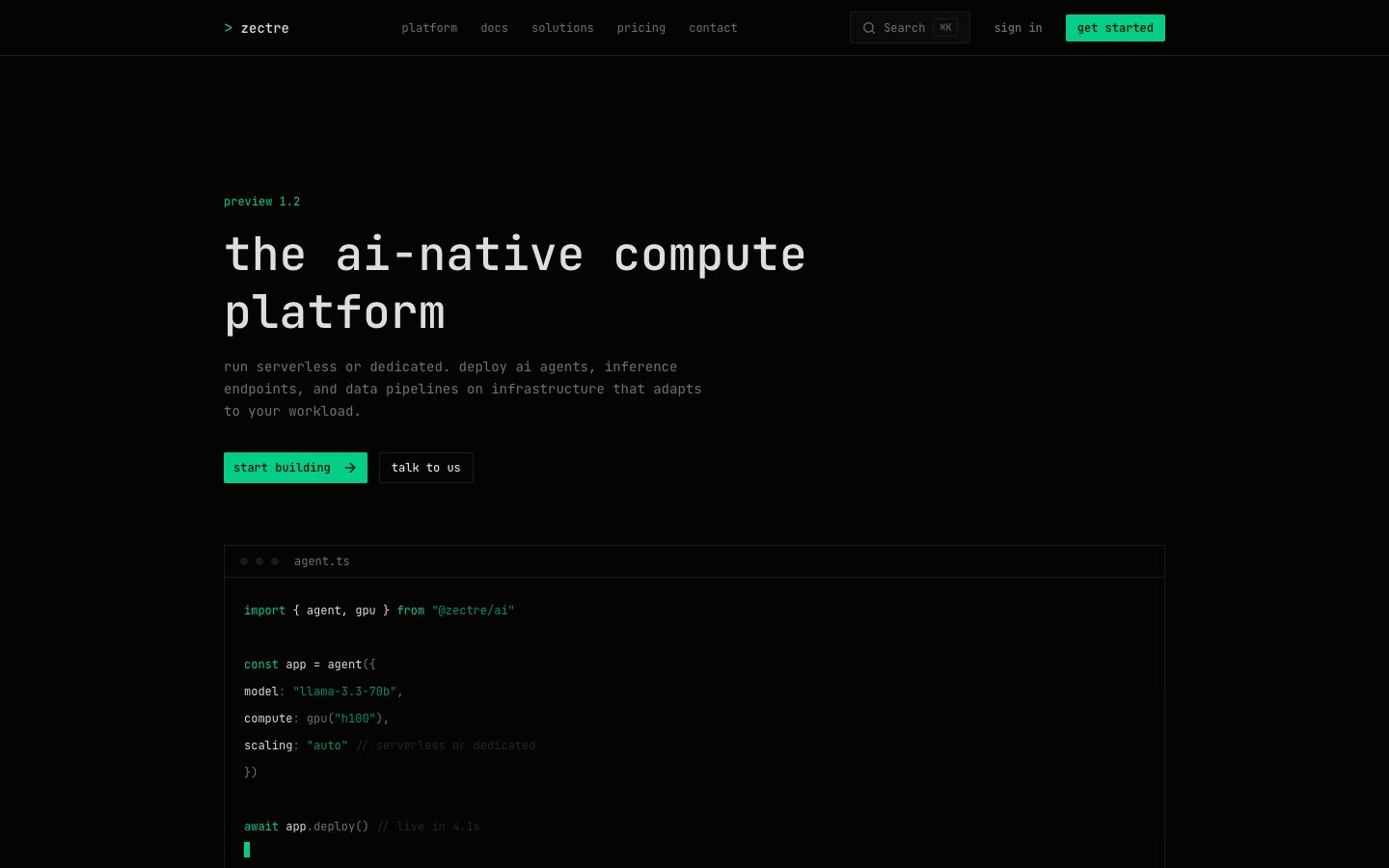
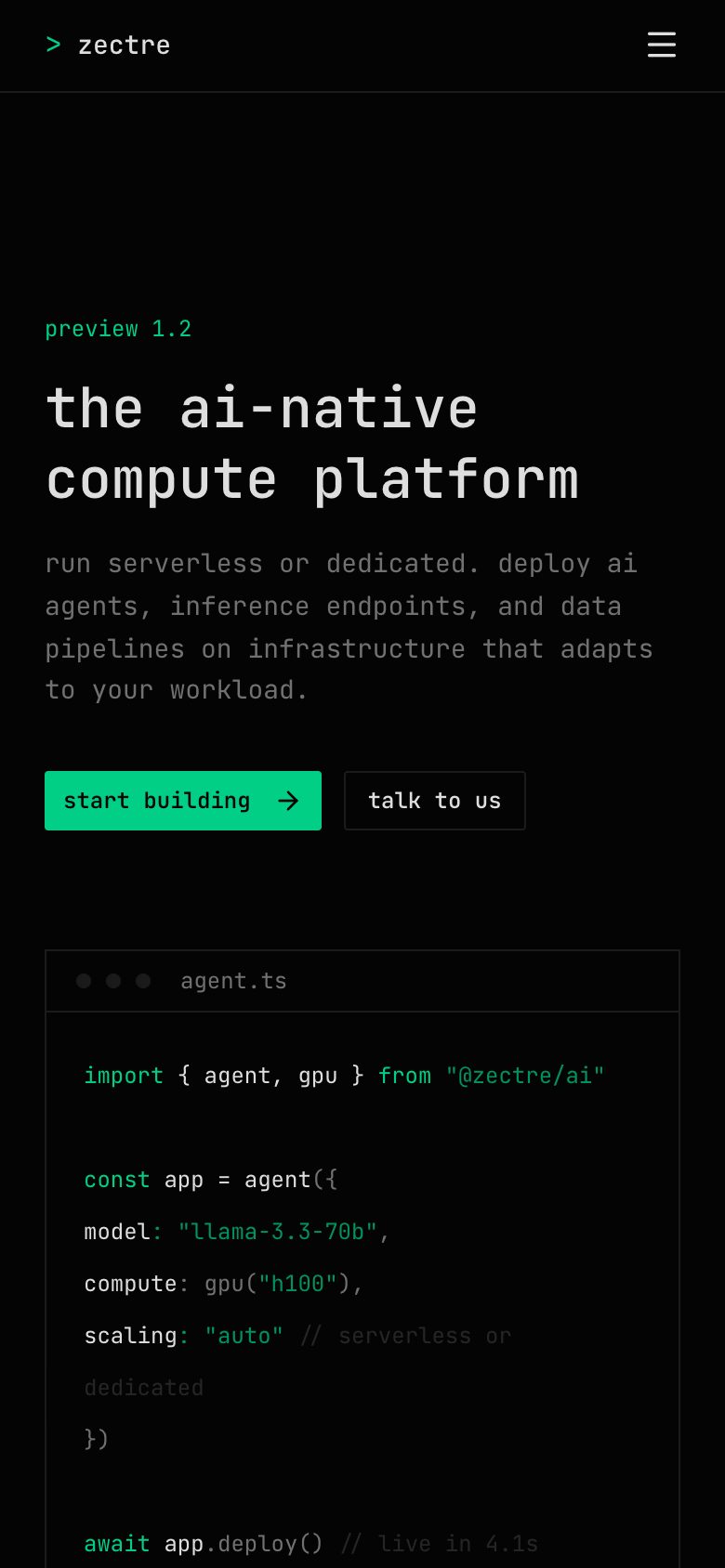
Zectre is an AI-native compute platform: run serverless or dedicated, and deploy AI agents, inference endpoints and data pipelines on infrastructure that adapts to the workload. You describe an app — a model, the compute it needs, how it should scale — and deploy() puts it live.
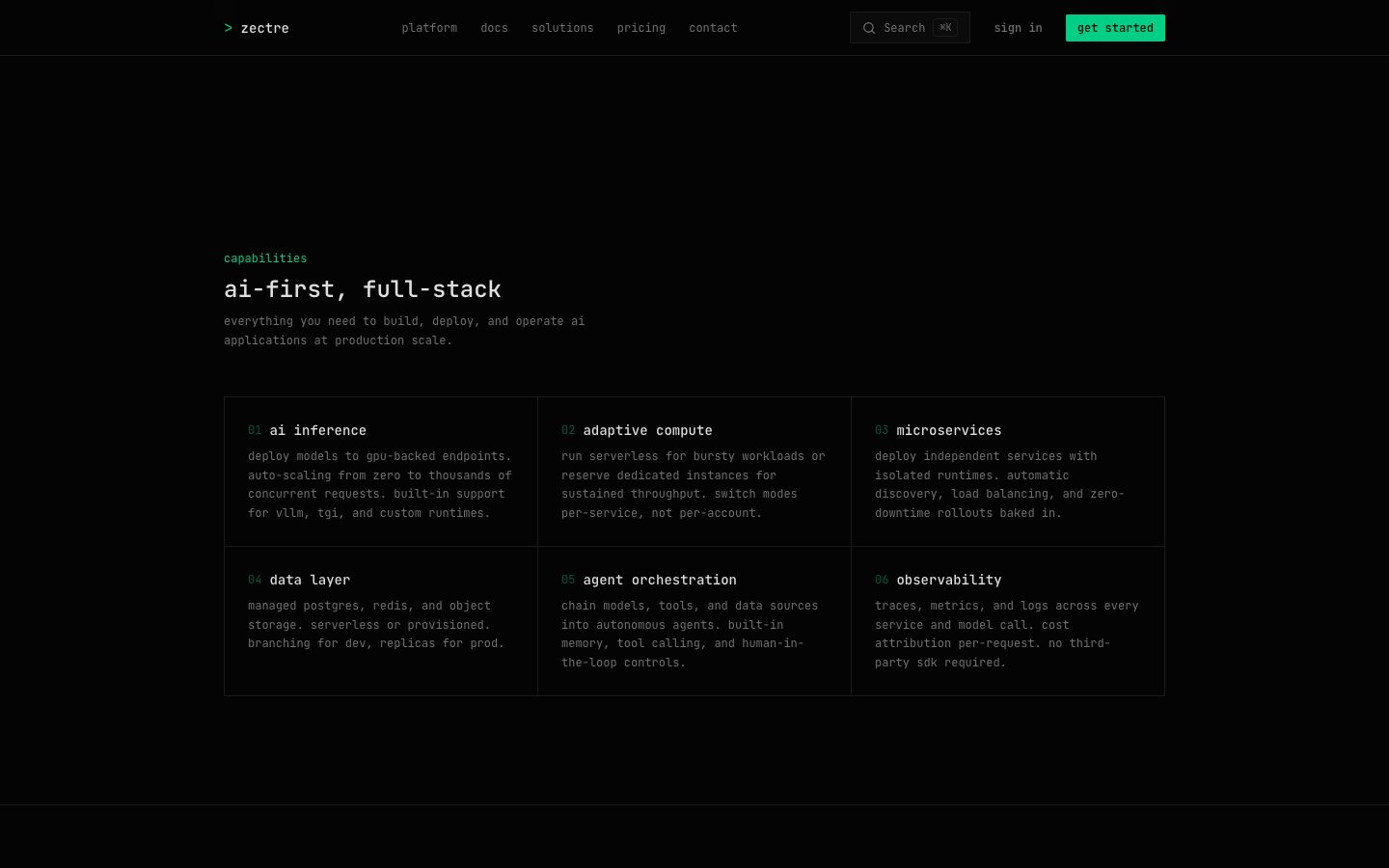
The platform covers six things. AI inference: models deployed to GPU-backed endpoints that scale from zero to thousands of concurrent requests, with vLLM, TGI and custom runtimes. Adaptive compute: serverless for bursty work or reserved dedicated instances for sustained throughput, chosen per service rather than per account. Microservices: independent services in isolated runtimes, with discovery, load balancing and zero-downtime rollouts built in. A data layer: managed Postgres, Redis and object storage, serverless or provisioned, with branches for development and replicas for production. Agent orchestration: models, tools and data sources chained into autonomous agents, with memory, tool calling and human-in-the-loop controls. And observability: traces, metrics and logs across every service and model call, with cost attributed per request and no third-party SDK.
Underneath is a Nomad-inspired orchestrator written in Rust, built first to run Tish native binaries. A control plane of zectre-api (the REST API), zectre-scheduler (job scheduling and allocation) and zectre-registry (artifact storage for compiled binaries) drives zectre-agent on each worker node, which executes and supervises the workloads, with zectre-proxy doing ingress, dynamic routing and load balancing in front. zectre-build is the CI service that compiles Tish source into those artifacts, and zectre-catalog handles GitHub OAuth, PKCE sign-in for the CLI and dashboard, JWKS and the cluster registry. Deploys can be driven from Git, through an OAuth app or a GitHub App with webhooks or pull-only access for private repos.
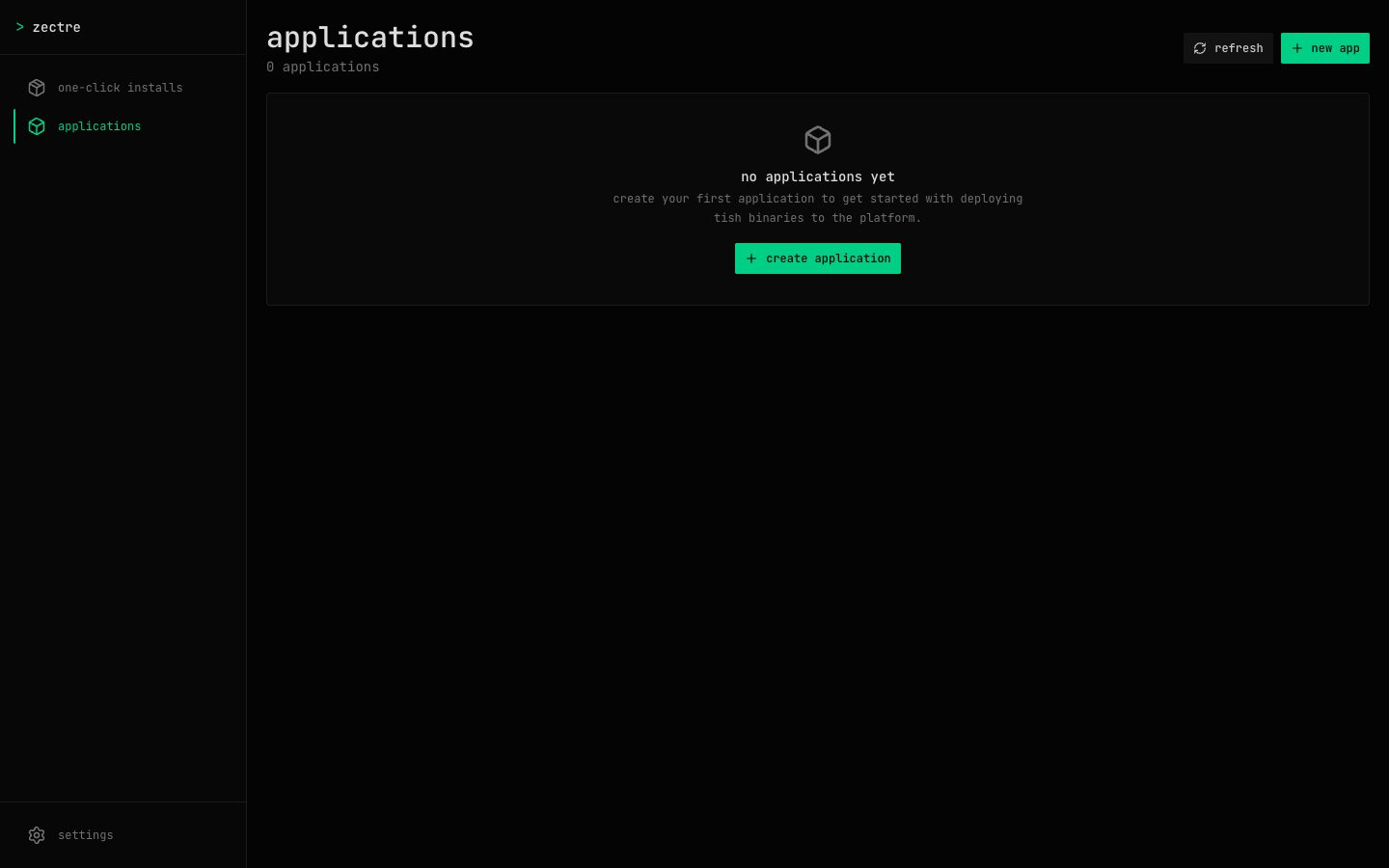
Clients are the zectre CLI and a web dashboard with one-click installs and an applications view, and a new project starts from npx create-zectre-app. The platform deploys to your own server in one command — compiling there, or cross-compiling Linux binaries on a Mac and uploading them.
before this
- ArzHost2003my hosting company
- cPanel Import2011moving sites onto plain servers
- Nody2015server provisioning and monitoring
- Cloud Runtime Bench2025one backend deployed to every runtime
history
- v1.30.0
- tag
- v1.28.0
- tag
- v1.27.0
- tag
- v1.24.3
- tag
- v1.18.0
- tag
- v1.13.0
- tag
- v1.11.1
- tag
- v1.11.0
- tag
- v1.9.0
- tag
- v1.4.0
- tag
- v1.0.0
- tag